
Understanding Coal Combustion Residuals (CCRs)
Coal combustion residuals (CCRs) – often collectively referred to as coal ash – are the inorganic byproducts generated from burning coal to produce electricity. As one of the largest industrial waste streams in the United States, managing CCRs requires a dual focus on environmental compliance and resource recovery.
Primary Forms of CCRs
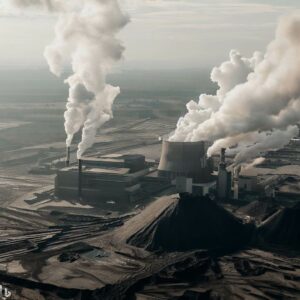
- Fly Ash: A fine, powdery material captured from flue gases by electrostatic precipitators or baghouses. Due to its pozzolanic properties, fly ash is widely utilized as a supplementary cementitious material (SCM) to replace Portland cement in concrete.
- Bottom Ash: Heavier, coarser angular particles that settle at the base of the boiler furnace, commonly repurposed as road base, structural fill, or lightweight aggregate.
- Boiler Slag: A vitrified, glassy granular material formed when molten ash is quenched in water, frequently utilized for abrasive blasting media and asphalt roofing granules.
- FGD Materials: Synthetic gypsum and related compounds produced by Flue Gas Desulfurization (scrubber) systems, widely reclaimed for drywall and agricultural use.
The Shift Toward Beneficial Reuse
Historically, the majority of CCRs were wet-sluiced into surface impoundments or disposed of in dry landfills. Today, economic and regulatory incentives have accelerated the transition toward beneficial reuse. Incorporating CCRs into construction materials significantly lowers the carbon footprint of concrete by offsetting carbon-intensive clinker production, reduces the demand for virgin raw materials, and enhances the long-term durability of infrastructure.
Managing Environmental Risks Through Characterization
Because coal ash concentrates trace minerals – including heavy metals such as arsenic, boron, selenium, and lead – unmanaged storage presents environmental risks, particularly the potential for groundwater contamination via leachate or airborne dust dispersion. Comprehensive material characterization and compliance testing are essential to evaluate both chemical leaching behavior and engineering performance, ensuring CCRs are safely matched to appropriate, high-value commercial applications.
Coal Combustion Residuals Testing
Applied Testing & Geosciences provides comprehensive coal combustion residuals and fly ash testing services tailored across two specialized evaluation tracks:
Track 1: Processed Fly Ash (ASTM C618 Compliance)
Direct verification testing to demonstrate that active, processed fly ash meets standard ASTM C618 specifications for immediate commercial use.
Track 2: Harvested & Reclaimed Material Characterization
A structured, multi-phase pathway designed to unlock the economic value of impounded or reclaimed CCR. We begin by benchmarking “as-is” material, followed by incremental processing trials to determine its potential to meet ASTM C618 specifications as a supplementary cementitious material (SCM). To de-risk adoption, testing can be expanded to evaluate actual performance in concrete through controlled laboratory trial batches. For materials that fall outside typical SCM profiles, our testing data helps asset owners identify viable alternative beneficial-reuse applications.
All evaluations follow testing methodologies guided by ASTM C1709, ASTM D5759, and ASTM E3355 – helping you turn byproduct liabilities into certified, high-value resources.
Contact us for more information.
Relevant standards for coal combustion residuals:
- ASTM C311 – Testing Coal Ash or Natural Pozzolans for Use in Portland-Cement Concrete
- ASTM C618 – Specification for Coal Ash and Raw or Calcined Natural Pozzolan for Use in Concrete: Specification / Test Plan
- ASTM C1709 – Evaluation of Alternative Supplementary Cementitious Materials (ASCM) for Use in Concrete
- ASTM D5759 – Characterization of Coal Fly Ash and Clean Coal Combustion Fly Ash for Potential Uses
- ASTM E3355 – Characterization of Coal Combustion Products (CCPs) in Storage Area(s) for Beneficial Use
- Complete Listing
Resources related to coal combustion residuals management: